Epileptic Seizures
There are three descriptions of seizures, depending on where
in the brain the activity started.
Partial Seizure
A partial seizure means the epileptic activity took place in
just part of the patient's brain. There are two types of partial seizure:
Simple partial seizure - the patient is conscious during the
seizure. In most cases, the patient is also aware of their surroundings, even
though the seizure is in progress.
Complex partial seizure - the patient's consciousness is
impaired. The patient will generally not remember the seizure, and if they do,
their memory will be vague.
Generalized Seizure
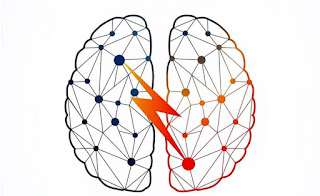
A generalized seizure occurs when both halves of the brain
have epileptic activity. The patient's consciousness is lost while the seizure
is in progress.
Tonic-clonic seizures (previously known as grand mal
seizures): Perhaps the best known type of generalized seizure. They cause a
loss of consciousness, body stiffness, and shaking.
Absence seizures: Previously called petit mal seizures,
these involve short lapses in consciousness where the individual appears to be
staring off into space. Absence seizures often respond well to treatment.
Tonic seizures: Muscles become stiff, and the person may
fall.
Atonic seizures: A loss of muscle control causes the
individual to drop suddenly.
Clonic seizures: This is associated with rhythmic, jerking
movements.
Secondary Generalized Seizure
A secondary generalized seizure occurs when the epileptic
activity starts as a partial seizure, but then spreads to both halves of the
brain. As this development happens, the patient loses consciousness.
Submit your abstracts to be a part of the International Conference on #Alzheimers, #Dementia and Related #Neurodegenerative Diseases and learn more about #Epilepsy



Comments
Post a Comment